DonateMembershipVisit Heritage
  • Tūrangawaewae
    Places
  • Tira Māori
    Māori Heritage
  • Poutairangahia
    Archaeology
  • Rauemi
    Resources
  • Mō Tātou
    About Us
  • New Zealand Heritage List
  • Nominate and submit
  • Explore the List
  • National Historic Landmarks
  • Plaques
  • Rainbow List Project
  • Lost heritage
  • Visit Heritage
  • Our properties
  • Turnbull House Project
  • Collections
  • Shop
  • Tohu Whenua
  • Tira Māori
  • Conserving Māori heritage
  • Marae built heritage
  • Māori heritage on the List
  • Hinemihi—Te Hokinga Mai
  • What is archaeology?
  • Is there a site on my property?
  • What are my legal requirements?
  • Affecting an archaeological site
  • Declaring an archaeological site
  • Archaeology FAQs
  • Archaeology Digital Library
  • Archaeology guidelines and templates
  • Resources
  • Funding
  • Publications
  • Sustainable management guides
  • Disaster recovery
  • Podcasts & digital resources
  • Education Hub
  • Conservation plans
  • About
  • Board
  • Māori Heritage Council
  • Senior Staff
  • Offices
  • Contact us
  • Careers
  • Covenants
  • Fast-track
  • Corporate documents
  • Currently consulting on
  • Our submissions
  • News
  • Covid-19 response
Quick links
Rārangi Kōrero | The List
Explore the List
National Historic Landmarks
Ngā Manawhenua o Aotearoa me ōna Kōrero Tūturu
Quick links
Tapuwae
A Vision for Places of Māori Heritage
Funding for Māori Heritage
Resources
Quick links
Archaeological Authority Portal
Applying for an archaeological authority
Archaeology FAQs
Browse the most frequently asked questions about archaeological authorities and the archaeological process.
Quick links
Quick links
News
News Keep up to date with Heritage New Zealand Pouhere Taonga
Membership
Membership Find out more and sign up today
DonateMembershipVisit Heritage
  • Tūrangawaewae
    Places
  • Tira Māori
    Māori Heritage
  • Poutairangahia
    Archaeology
  • Rauemi
    Resources
  • Mō Tātou
    About Us
  • New Zealand Heritage List
  • Nominate and submit
  • Explore the List
  • National Historic Landmarks
  • Plaques
  • Rainbow List Project
  • Lost heritage
  • Visit Heritage
  • Our properties
  • Turnbull House Project
  • Collections
  • Shop
  • Tohu Whenua
  • Tira Māori
  • Conserving Māori heritage
  • Marae built heritage
  • Māori heritage on the List
  • Hinemihi—Te Hokinga Mai
  • What is archaeology?
  • Is there a site on my property?
  • What are my legal requirements?
  • Affecting an archaeological site
  • Declaring an archaeological site
  • Archaeology FAQs
  • Archaeology Digital Library
  • Archaeology guidelines and templates
  • Resources
  • Funding
  • Publications
  • Sustainable management guides
  • Disaster recovery
  • Podcasts & digital resources
  • Education Hub
  • Conservation plans
  • About
  • Board
  • Māori Heritage Council
  • Senior Staff
  • Offices
  • Contact us
  • Careers
  • Covenants
  • Fast-track
  • Corporate documents
  • Currently consulting on
  • Our submissions
  • News
  • Covid-19 response
Quick links
Rārangi Kōrero | The List
Explore the List
National Historic Landmarks
Ngā Manawhenua o Aotearoa me ōna Kōrero Tūturu
Quick links
Tapuwae
A Vision for Places of Māori Heritage
Funding for Māori Heritage
Resources
Quick links
Archaeological Authority Portal
Applying for an archaeological authority
Archaeology FAQs
Browse the most frequently asked questions about archaeological authorities and the archaeological process.
Quick links
Quick links
News
News Keep up to date with Heritage New Zealand Pouhere Taonga
Membership
Membership Find out more and sign up today
  • Nominate and submit
  • National Historic Landmarks
  • Nominate and submit
  • National Historic Landmarks
  • Conserving Māori heritage
  • Marae built heritage
  • Conserving Māori heritage
  • Marae built heritage
  • Archaeological authorities
  • Archaeology Digital Library
  • Archaeological authorities
  • Archaeology Digital Library
  • All resources
  • Publications
  • Funding
  • All resources
  • Publications
  • Funding
  • FAQs
  • FAQs
Follow us on:
Places
  • Nominate and submit
  • National Historic Landmarks
Tira Māori
  • Conserving Māori heritage
  • Marae built heritage
Archaeology
  • Archaeological authorities
  • Archaeology Digital Library
Resources
  • All resources
  • Publications
  • Funding
FAQs
  • FAQs
Follow us on
HomePrivacyTerms and conditionsAbout this site
© Heritage New Zealand Pouhere Taonga 2026.
 
Aratapu Public Library (Former)

32 Mt Wesley Coast Road, DARGAVILLE

Public

Historic Place Category 2

List No. 9947

Quick links:
List GalleryLocationDetails
The Aratapu Public Library (Former) was established in 1874, and the former library building is now located at Harding Park, Dargaville and has been incorporated into the Dargaville Museum. The building has been a school, a post office, a library and is now an exhibition space. It is a very adaptable building. The building illustrates an important aspect of New Zealand history, the milling of the once vast kauri forest, an important economic activity which contributed to the nation’s development. After the kauri was gone, so too was the town of Aratapu. The building is a remnant of those days. The Aratapu Public Library (Former) has architectural and aesthetic values as a small wooden neo-classic building, originally a school house to which a lodge antenatal room was later added, with a façade that was designed to emulate high culture associated with intellectual and educational self-improvement personified by classical Greek architecture. The building is held in high public esteem by the Dargaville community, who raised funds to have the building relocated to Harding Park, where it was restored with voluntary labour.

Aratapu was known as ‘Sawdust City’ during the latter part of the nineteenth and early twentieth centuries because of the quantity of kauri sawdust produced from the sawmill operating there. By 1878 the Aratapu sawmill complex had become the largest mill in New Zealand, and new buildings were erected in the 1870s to accommodate the growing population of workers and their families. These buildings included a hall and a school. The library was developed to be part of a change to enhance family and community life amidst concerns about drinking in the district. The social movement of the Good Templars were active in the Aratapu community with the school teacher John Chilman holding a high post in the movement. The Templars believed in community based interventions to reduce harm caused by alcohol - the Aratapu Public Library (Former) is a manifestation of this principle.

In 1875 the first Aratapu School was constructed on Monk Street by carpenters employed by the Union Sash and Door Company who operated the Aratapu sawmill at that time. It was built using locally milled timber (predominately kauri). The library (established the previous year) originally occupied one end of this school building and an anteroom added by the Good Templars in 1876, but when a new school building was erected in 1879, the former school building was taken over by the library committee.

The library continued to flourish, and by 1884 it had 700 books. It later experienced financial difficulties however, and temporarily closed in 1894, before being relocated to a more prominent location on Aratapu’s main thoroughfare (Heawa Street) in 1895. In 1943 the Aratapu Public Library (Former) building was moved from its Heawa Street location to a more central site on the main Aratapu- Te Kopuru Road. The building was then used as the Aratapu Post Office and finally closed in 1972. It was thereafter relocated to the former site of the Dargaville Museum on Normanby Street. It was moved again to Awakino Point near Dargaville, and in 2007 it was relocated to the Dargaville Museum site at Harding Park. The library building was restored including the rear lean to structure that had been added in the 1980s. It opened in October 2007 as the music wing of the Dargaville Museum, housing the Kevin Friedrich accordion collection.
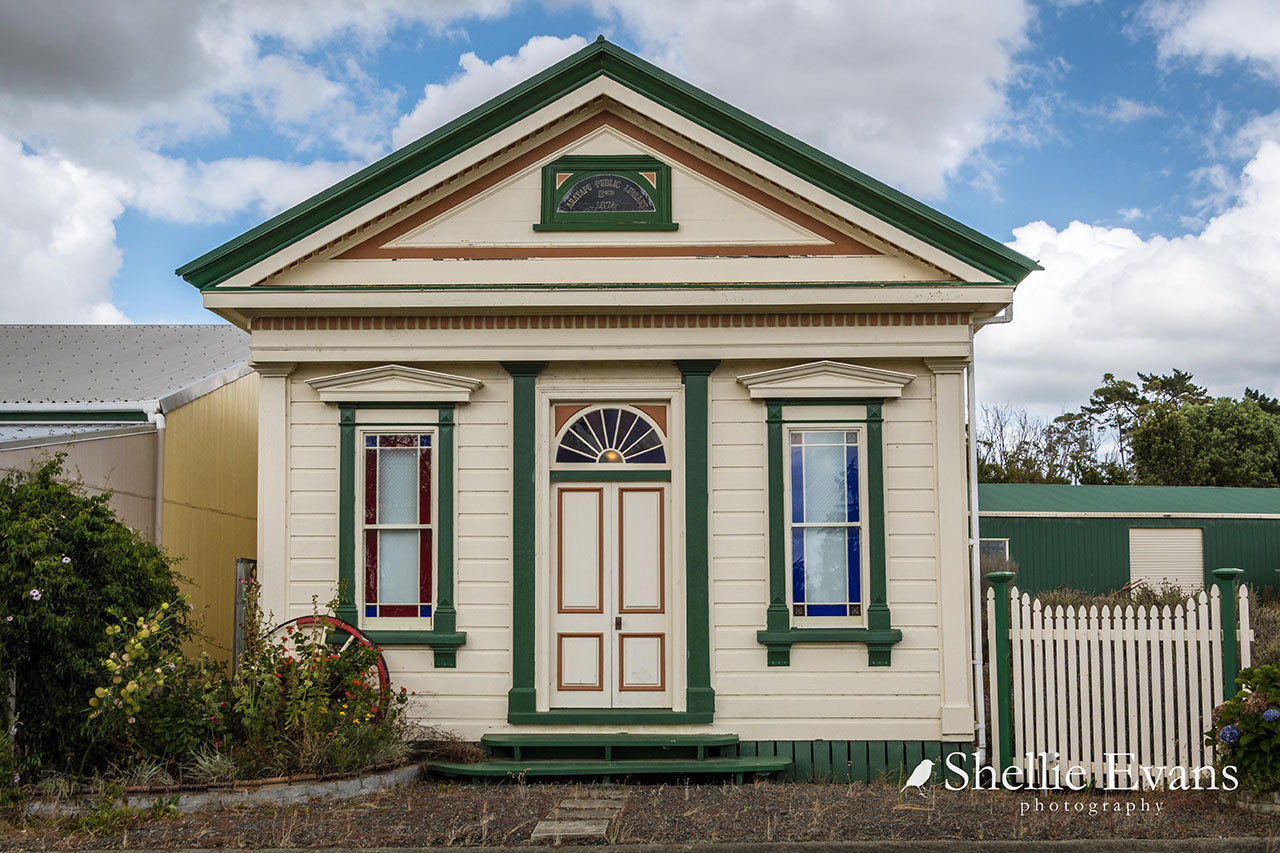
Aratapu Public Library (Former), Dargaville CC BY-NC-ND 2.0 Image courtesy of www.flickr.com | Shellie Evans – flyingkiwigirl | 10/02/2019 | Shellie Evans
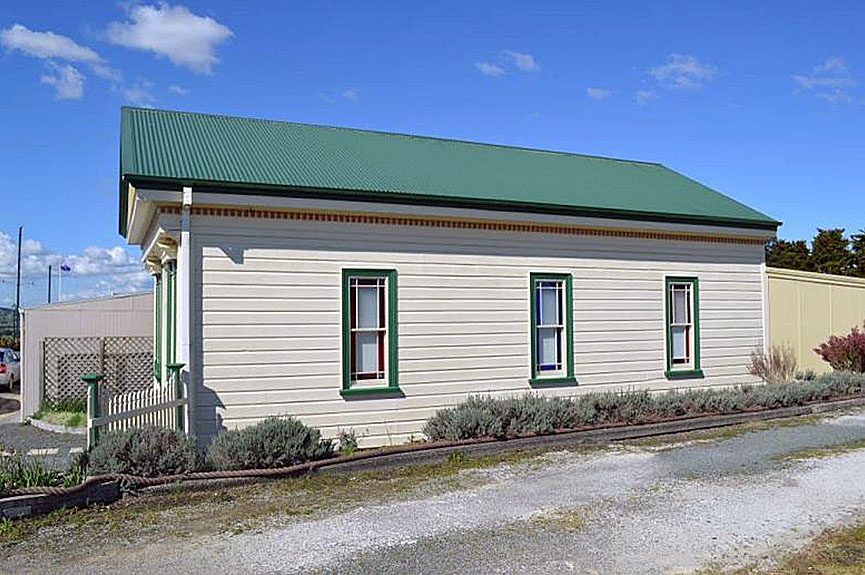
Aratapu Public Library (Former), Dargaville. Western view | Bill Edwards | 01/08/2015 | Heritage New Zealand
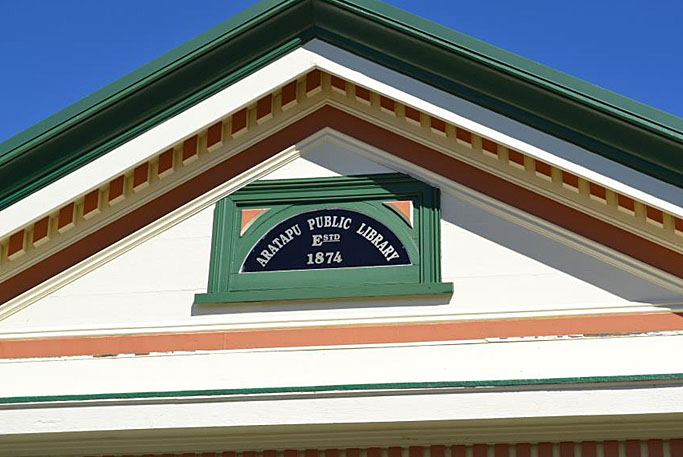
Aratapu Public Library (Former), Dargaville. Detail of front exterior | Bill Edwards | 01/08/2015 | Heritage New Zealand
Aratapu Public Library (Former), Dargaville CC BY-NC-ND 2.0 Image courtesy of www.flickr.com | Shellie Evans – flyingkiwigirl | 10/02/2019 | Shellie Evans
Aratapu Public Library (Former), Dargaville. Western view | Bill Edwards | 01/08/2015 | Heritage New Zealand
Aratapu Public Library (Former), Dargaville. Detail of front exterior | Bill Edwards | 01/08/2015 | Heritage New Zealand

List Entry Information

Overview

Status
Listed

List Entry Status
Historic Place Category 2

Access
Able to Visit

List Number
9947

Date Entered
23rd June 2016

Date of Effect
13th July 2016

City/District Council
Kaipara District

Region
Northland Region

Extent of List Entry

Extent includes part of the land described as Pt Aoroa Blk (RT NA182/34, NZ Gazette 1982 p.1566), North Auckland Land District and the building known as Aratapu Public Library (Former) thereon. The extent excludes the lean-to addition at the rear of the building (Refer to map in Appendix 1 of the List entry report for further information).

Legal description

Pt Aoroa Blk (RT NA182/34, NZ Gazette 1982 p.1566), North Auckland Land District

Detailed List Entry
Significance

Cultural Significance

Social Significance or Value The building is held in high public esteem by the Dargaville community. They fundraised and applied for grants and loans to have the building relocated to Harding Park. The building has been restored with voluntary labour and is currently used to showcase the musical heritage of the Kaipara area.

Historic Significance

Historical Significance or Value Aratapu as a town ceased to exist with the closure of its timber mills. The former public library is a remnant of that town. It is an artefact of a time when the milling of the kauri forest was an important economic activity that contributed to the nation’s development. The building is an important survivor of that story that demonstrates this phase of exploitation of New Zealand natural forest resources. The building has had multiple uses and locations over time, it has been a school house, a library, a post office, a training venue, and is currently used as an exhibition space.

Physical Significance

Aesthetic Significance or Value Aratapu Public Library (Former) has high aesthetic values through its design and neoclassical features. The building has been skilfully painted to bring the architectural features into prominence. The building is a wooden building that has a considerable amount of carpentry detailing which raises it above the ordinary. Externally there are details such as friezes, architraves and dentil mouldings made from timber and stained glass and the original central fanlight which contribute to its aesthetic value. Architectural Significance or Value The Aratapu Public Library (Former) has architectural value as a very good example of a small wooden neo-classical building. It is designed to emulate high culture associated with intellectual and educational self-improvement personified by classical Greek architecture. It clearly demonstrates the use of wood to imitate a stone building from the classical period.

Detail Of Assessed Criteria

(a) The extent to which the place reflects important or representative aspects of New Zealand history The building represents an important aspect of New Zealand history and reflects the milling of the once vast kauri forest, an important economic activity in the development of New Zealand. The kauri resource was milled by using efficient steam driven mills that decimated the forest. After the kauri was gone so was the town of Aratapu. The building is a remnant of the township which developed to serve the intellectual and social needs of the kauri sawmill workers and their families. (e) The community association with, or public esteem for the place The building is held in high public esteem by the Dargaville community. They fundraised, applied for grants and loans to have the building relocated to Harding Park. The building has been restored with voluntary labour. The public esteem for the building is high. (f) The potential of the place for public education The building is currently publicly accessible as part of the Dargaville Museum and the story of Aratapu and how this building is part of the boom and bust of the kauri industry could be further explored. (g) The technical accomplishment or value, or design of the place The building is a technically accomplished example of a small neo-classical building. Externally there are details such as friezes, architraves and dentil mouldings made from timber and internally the standard of finish is high with great care being taken in matching, jointing and finishing. The building stands as a testament to the decorative use of timber in New Zealand when it was built in the nineteenth century, with the wood being sourced from the local Aratapu timber mill.

Construction Professional

Name

Union Sash and Door Company

Type

Builder

Biography

No biography is currently available for this construction professional

Construction Details

Finish Year

1875

Type

Original Construction

Description

Aratapu School built and library included at rear of the building.

Finish Year

1876

Type

Additional building added to site

Description

Antenatal room added to school building

Finish Year

1879

Type

Modification

Description

New school built and former school building readapted for library

Start Year

1895

Finish Year

1895

Type

Relocation

Description

Library building moved from Monk Street to Heawa Road, Aratapu

Start Year

1943

Finish Year

1943

Type

Relocation

Description

Library moved to Aratapu- Te Kopuru Road and used as Aratapu Post Office until 1972

Type

Relocation

Description

Library moved to Normanby Street, Dargaville (the former Dargaville Museum site).

Period

1970s

Start Year

1985

Finish Year

1985

Type

Relocation

Description

Library gifted to the IHC who moved it to Awakino Point near Dargaville.

Type

Additional building added to site

Description

Small lean-to structure added to rear of building, housing toilet facilities for IHC

Period

1980s

Start Year

2007

Finish Year

2007

Type

Relocation

Description

Former library moved to its present position at Harding Park and restored

Construction Materials

Timber (kauri); corrugated iron

Historical Narrative

Early Māori History The Kaipara Harbour and it tributary rivers including the Wairoa provided an attractive environment for Māori settlement. Fish, eels, and water fowl were found in the river systems. The nearby forests provided more birds and plant resources. The well drained fertile flats with its warm climate and sandy soils provided the ideal conditions for growing kūmara. The natural resources of the region were sufficient to support a large number of Māori inhabitants. The number of recorded pā sites indicated that the district was long occupied and fought over. The harbour and its tributary rivers provided the main means of access. In the early nineteenth century the northern Wairoa region was disputed between Te Uri o Hau, Te Roroa and various groups affiliated more closely Ngāpuhi including Te Parawhau. From 1836 onwards a small number of Pākeha traders and sawyers came into the Northern Wairoa river area. They made various arrangements with local chiefs to build homes and trading stores, and to cut timber. The principal rangatira, Tirarau, Parore and Paikea, co-operated in encouraging the Pākeha traders and signed the deeds providing them with land. Establishment of Aratapu – ‘Sawdust City’ Thomas Forsaith established a trading store in 1839 at the confluence of the Kaihu and Wairoa Rivers, now the site of Dargaville. In 1842 the store suffered a destructive raid by local Maori by muru for the alleged plunder of a wāhi tapu. A human skull was found close by to the store and it was concluded by Māori that Forsaith had desecrated an urupā and removed human remains. Evidence was produced after the muru that the skull had been found after washing down the river but had been placed in the store with potatoes which was highly offensive to Māori. The Crown made Te Uri o Hau and Te Parawhau cede land for the plunder of the store which amounted to between 6000 to 8000 acres, and was known as the Te Kopuru Block. Lord Stanley, the Secretary of State for the Colonies, said land at Te Kopuru should be regarded as Crown property acquired in the course of penal infliction. The ceded land was disputed by Ngāti Whiu and Ngāti Kawa hapū of Te Roroa who said that they were the rightful owners of the land. In 1867 it went before the Native Land Court where it was found that the land had been surveyed twice and the second survey had taken substantially more land than the original survey. The hapū were awarded Crown payment of seventy pounds. Ngāti Whiu and Ngāti Kawa protested in 1878, petitioned government in 1881 and went to the Native Land Court in 1891 but their claims were dismissed. The site of the town of Aratapu was on the land that was disputed by Ngāti Whiu and Ngāti Kawa. Aratapu was known as Sawdust City during the latter part of the nineteenth through to the early twentieth century because of the quantity of kauri sawdust produced from the sawmills that operating there. During the milling days Aratapu was the main centre of commerce on the Northern Wairoa. Kauri, with its attributes of a straight grain, timber content and durability was a prime building and boat-building material, and there was growing demand for its timber throughout colonial New Zealand and beyond. Māori in the north had utilised the timber, using it for carving, house building and waka. The early European explorers had seen the potential of kauri and it was first used by Europeans for mast and spar replacements. The kauri was cut in the bush by forest workers working in timber camps. It was either pit sawn on site, or transported by bullock train or water to be further processed. The exploitation of the vast timber resources of North America led to new milling technology, and new industrial technologies arrived in New Zealand in the mid-nineteenth century. The technology that was to have a profound effect on the exploitation of kauri was the steam-driven sawmill. Prior to 1864, the Northern Wairoa timber industry had been confined to the preparation of spars and small quantities of timber. The arrival of steam-driven sawmills and the growth of nearby Auckland meant that the timber industry changed from small sawyers’ camps to industrial centres with concentrations of equipment and personnel. The first large sawmill was on the banks of the Northern Wairoa River and was built at Aratapu in 1865 by William Fairlie Bonar. The mill was capable of producing 50,000 super feet of timber per week. The mill then changed hands several times and in 1873 the Union Sash and Door Company took it over. In 1888 the Kauri Timber Company took over the Aratapu mill, and this company came to dominate the kauri industry. It acquired extensive bush holdings in Northland and the Coromandel and owned and operated 28 timber mills. Aratapu became the chief population centre of the Northern Wairoa. By 1891 the population had reached 1,000 people and the peak population was 1,610 in 1901. Hobson County Council had its offices at Aratapu, and the town had a Post Office, a public school, a hall, Anglican and Wesleyan Churches, a branch of the National Bank, a Masonic Lodge, a hotel, several boarding-houses, a skating rink and billiard saloon. Expansion of Aratapu Township During the 1870s there was a rapid period of expansion as the Union Sash and Door Co. constructed and developed two new mills. These mills could produce sawn timber and speciality mouldings, flooring and shelving. By 1878 the Aratapu complex had become the largest sawmill in New Zealand, employing about 300 men and with an annual capacity of 14 million feet (4,267 200 metres). New buildings were constructed to accommodate the workers and their families and these included a hall and a school. Drinking was seen as the main cause of disorder in the district as many of the petty crimes and accidental deaths involved alcohol. People sought to develop family and community life; sober pursuits were encouraged and the Aratapu Public Library was part of that change. Aratapu also had a Mutual Improvement Society, the Band of Hope and Independent Order of Good Templars who were associated with the temperance movement. New Zealand’s First Libraries Libraries embodied the ideal of self-improvement through lifelong learning. In Britain, movements towards universal education and in particular adult self-improvement combined both these strands—the educational and the cultural—and these values were brought to New Zealand by 19th-century immigrants, who saw and used reading as a central part of their value system. Public libraries were set up soon after organised European settlement began in 1840. The Port Nicholson Exchange and Public Library is thought to be New Zealand’s first public library, and was established by a group of local settlers and opened in May 1841 in Wellington. The first libraries were generally run by organisations like mechanics’ institutes though, which promoted adult learning. Libraries opened in Auckland and Nelson in 1842 and whilst anyone could join, they had to pay a subscription fee. Provincial and then Central Government became involved in the funding of libraries from the early 1850s and Central Government later took control of some public libraries, such as the Auckland Mechanics’ Institute Library which was taken over by Auckland City Council in 1880. Formation of the Aratapu Public Library The Aratapu Public Library was established in 1874 and from 1875 it occupied one end of the newly constructed Aratapu School building on Monk Street, the main thoroughfare to the river and once the ‘liveliest portion of the settlement’. The Library was funded through a combination of private and government contributions, and is described in an 1876 newspaper article, which notes: ‘A free library of 400 books has been collected, principally through the interest of mill manager, Mr. Walker, who presented 200 books, which were followed by volumes from other friends, so that in conjunction with the government grant, a very creditable library has been formed.’ In August 1876 the library had acquired the use of an additional room – a lean-to attached to the school room which had been erected by the local lodge of the Good Templars as an anteroom. It appears that this room is the room at the frontage of the building (originally divided from the school building by an internal wall with double fireplace), given the neo-classical façade common to lodge buildings. This additional room was made available to the library on nights when it was not required for lodge purposes. As a result, the Public Library Committee ‘sent to Auckland for various games, which they purchased from Mr. Harris, via, complete lots of chessmen, draughtsmen, and dominoes.’ The 1876 newspaper article also notes that the library rooms were well illuminated, as Messrs E. Porter and Co. (well-known Auckland ironmongers) had gifted the library three suspension lamps. In October 1878 tenders were called for the construction of a new school building for Aratapu. The new building was erected in 1879 and located on the intersection of the road to Pouto and Aratapu. The former school building which housed the library was then readapted by the library committee and refitted for the purpose. The library’s collection continued to grow, and it had over 700 books by 1884. The library was in a good financial position at this time and had 100 pounds to spend on new books, which were ordered from Edinburgh. The library committee also had sufficient funds to undertake maintenance of the library building and invest in improved lighting. However, by the early 1890s the library was in a difficult financial position, and in October 1893 a decision was made to only open the library and reading room three evenings a week, to reduce overheads. The library had reduced to 13 members by March 1894 and the library committee made the difficult decision to close the library. The committee felt that the library was in the wrong location, and would benefit from relocation to the main street. By 1891 Monk Street was described as being ‘comparatively deserted’. A Mr John Morgan was approach and offered a site fronting Aratapu Road (Heawa Road), and the library committee carried a motion to authorise the relocation of the library building into the main Aratapu Road. The Kauri Timber Company were approached about the relocation, but refused to give their approval to move the building to the site offered by Mr Morgan. As an alternative they offered a site ‘next to Mr Neild’s dwelling house on the main road’. Library Committee Chair Mr Samuel Webb considered it very unjust of ‘a wealthy company like the Kauri Company to refuse the public the right to remove the building which had been erected by public subscription for the special purposes of a library, and had been so used for the past 20 years’, and a motion was carried to decline to remove the building to any other site than a freehold. Benefits were held in 1894 and 1895 to raise funds for the library’s relocation to the main road where it would be more ‘conveniently located for the great majority of passengers’ and in May 1895 tenders were called for its removal. By September 1895 contractor Mr Donaldson had nearly completed work to get the building into position on its new site on the main road and the library had opened at its new location by 26 September 1895. In June 1896 it was noted that the library appeared to be ‘better patronised now that it has been moved to its present position on the main thoroughfare’. It continued to operate through into the twentieth century. A township in decline In 1908 the Kauri Timber Company closed the mills in Aratapu and the Company Store was loaded onto a scow in 1909 to Kawhia. A small amount of milling occurred after the Kauri Timber Company left Aratapu, such as the timber and treatment mill owned by the Glamuzina family (operating from 1946 to 1972) but this was the final blow for the milling town. A newspaper article indicates that the Aratapu Public Library was still open in 1914, but it is unclear when it finally closed its doors. In 1943 however, the library building was moved to a more central site on the main Aratapu-Te Kopuru Road, and became the new Aratapu Post Office. The post office was threatened with closure in 1950 and again in 1965 due to low volumes of business. The Post Office, which by 1971 was in a very dilapidated condition, finally closed in 1972. The abandoned library building was given to the Dargaville Museum in the early 1970s and relocated and moved to the then museum site in Normanby Street, Dargaville. In 1985 the Dargaville Museum moved to its present site at Harding Park and the former library building was seen as surplus to requirements and given to the Intellectually Handicapped Children Society (IHC). The building was used as part of a rural training unit at Awakino Point near Dargaville. The IHC sold the property in December 2005 to Steven Griffiths who put the library up for tender. The community called for the library building to be kept in the district so the Dargaville Museum with the help of a grant from the ASB Community Trust and donations from the Dargaville community raised the necessary money for the purchase price. Aratapu Public Library (Former) was re-acquired on 9 June 2006. Relocation to Dargaville Museum, Harding Park On 18 January 2007 the former Aratapu Public Library building was loaded onto a removal truck and transported to its present location at the Dargaville Museum in Harding Park. Harding Park had been gazetted as a public reserve (site for museum) under the Reserves Act in 1982 (NZ Gazette 1982 p 1566). The building was restored using voluntary labour and a small lean-to structure that was originally built by the IHC Society as their toilets was made into display space. Changes made to the building during the restoration included removal of the double fireplace and construction of new kauri double doors at the front entry. In October 2007 the restored library was opened as the music wing of the museum, housing the Kevin Friedrich accordion collection.

Physical Description

Current Description Setting Harding Park is on a ridge (Mount Wesley/Mangawhare Bluff) overlooking Dargaville and the Northern Wairoa River. The site has spectacular views with the Tutamoe Range in the north, Maungara and Tangihua ranges in the northeast and the Kaipara Harbour to the south. At the eastern end of Harding Park with these commanding views is Pou Tu o Te Rangi pā. The kōrero of the pā is that Ngāti Rangi who are a hapū of Ngāti Awa were its first inhabitants. Ngāti Awa left the Kaipara after a series of battles. Te Uri o Hau have claimed mana over Pou Tu o Te Rangi pā which was recognised in the 2002 Te Uri O Hau Treaty Claims settlement. There are archaeological features visible on the pa, including ditches, banks, terraces and kumara pits. Aratapu Public Library (Former) is situated west of the pā on land that was highly modified during earthworks associated with the building of the museum complex. It is located adjacent and west of the main museum building. The eastern side of the library is attached to the Dargaville Museum making it accessible to visitors from the main museum facility. The library building The library building is of timber weatherboard construction and the timber used is predominately kauri. The building has a neo-classical façade made to look similar to a classical Greek Temple. It is painted in a manner which highlights the architectural features with the columns painted to contrast from the rest of the building that is currently (2015) painted in a pale yellow. The building has a clear symmetry with double hung doors in the middle flanked by wooden columns with a window either side. The doors have two panels, a larger above and a smaller below. Above the door is a fanlight which represents a sun with sun beams. The windows are flanked with columns and above the windows is a pointed pediment. The windows are double-hung sash windows and have clear glass in the centre flanked with coloured glass. The right window has blue glass while the left has red. The windows are divided with two vertical glazing bars and one horizontal glazing bar, and they are in proportion to one sixth of the total area of the window. This gives the windows symmetry and form. Above the windows and doors is an architrave and the frieze above the architrave has dentil mouldings. In the centre of the tympanum is a curved sign which has the words ARATAPU PUBLIC LIBRARY ESTB 1874. The sides and the rear walls are unadorned except for the use of decorative glass in the windows. There are three windows on the west side and two on the east. The modern lean-to structure at the rear of the building is clad with fibrolite sheeting with plastic joiners. The building is set on 300 millimetre wooden blocks to raise it above the ground. The floor construction is 150 millimetre x 75 millimetre sleepers and 150 millimetre x 50 millimetre joists at 500 millimetre centres, on top of the joists is tongue and groove flooring. The walls are 100 millimetre x 75 millimetre studs with rusticated weatherboards on the outside, internally clad with match lining. The roof construction has a 250 millimetre x 25 millimetre ridge board. The ceiling joists are 175 millimetres x 50 millimetres at 500 millimetre centres and the rafters are 150 millimetres x 50 millimetres, the roof is corrugated iron, and internally the kauri sarking on the ceiling is 150 millimetres x 25 millimetres. Internally the ceiling is dark-stained board and batten with a wooden cornice, with a painted beam which appears to mark the division between the former lodge anteroom at the front and former school building to the rear. The walls have horizontal tongue and groove match lining and one third up from the floor is a dado rail with tongue and groove vertical match lining acting as wainscoting. Great care has been taken in matching, jointing and finishing. The former library is used as a museum display space and so has museum cabinets and displays in the building. The three suspension lamps originally gifted by Messrs E. Porter and Co. still hang from the ceiling.

Reference

Completion Date

2nd June 2016

Report Written By

Bill Edwards

Information Sources

Auckland Waikato Historical Society Journal

Auckland Waikato Historical Society Journal

Bradley, 1982

E. K. Bradley, The Great Northern Wairoa, (4th edn.), Auckland, 1982

Blucher, 1973

Blucher, M., Aratapu Public Library, 1874, PhD diss., University of Auckland, 1973.

Report Written By

A fully referenced New Zealand Heritage List report is available on request from the Northland Area Office of Heritage New Zealand. Please note that entry on the New Zealand Heritage List/Rarangi Korero identifies only the heritage values of the property concerned, and should not be construed as advice on the state of the property, or as a comment of its soundness or safety, including in regard to earthquake risk, safety in the event of fire, or insanitary conditions.

Further Information

Current Usages

Uses: Civic Facilities

Specific Usage: Museum

Former Usages

General Usage:: Civic Facilities

Specific Usage: Civic facilities - other

General Usage:: Civic Facilities

Specific Usage: Library

General Usage:: Communication

Specific Usage: Post Office

General Usage:: Education

Specific Usage: School

Themes

Web Links

description: The Dargaville Museum (New Zealand) presents...'Accordion Gems' by Kevin Friedrich

url: http://www.accordions.com/kevin/museum.htm

Overview

Status

Listed

List Entry Status

Historic Place Category 2

Access

Able to Visit

List Number

9947

Date Entered

23rd June 2016

Date of Effect

13th July 2016

City/District Council

Kaipara District

Region

Northland Region

Extent of List Entry

Extent includes part of the land described as Pt Aoroa Blk (RT NA182/34, NZ Gazette 1982 p.1566), North Auckland Land District and the building known as Aratapu Public Library (Former) thereon. The extent excludes the lean-to addition at the rear of the building (Refer to map in Appendix 1 of the List entry report for further information).

Legal description

Pt Aoroa Blk (RT NA182/34, NZ Gazette 1982 p.1566), North Auckland Land District

Status

Listed

List Entry Status

Historic Place Category 2

Access

Able to Visit

List Number

9947

Date Entered

23rd June 2016

Date of Effect

13th July 2016

City/District Council

Kaipara District

Region

Northland Region

Extent of List Entry

Extent includes part of the land described as Pt Aoroa Blk (RT NA182/34, NZ Gazette 1982 p.1566), North Auckland Land District and the building known as Aratapu Public Library (Former) thereon. The extent excludes the lean-to addition at the rear of the building (Refer to map in Appendix 1 of the List entry report for further information).

Legal description

Pt Aoroa Blk (RT NA182/34, NZ Gazette 1982 p.1566), North Auckland Land District

Significance

Why is this place significant?

Cultural Significance

Social Significance or Value The building is held in high public esteem by the Dargaville community. They fundraised and applied for grants and loans to have the building relocated to Harding Park. The building has been restored with voluntary labour and is currently used to showcase the musical heritage of the Kaipara area.

Historic Significance

Historical Significance or Value Aratapu as a town ceased to exist with the closure of its timber mills. The former public library is a remnant of that town. It is an artefact of a time when the milling of the kauri forest was an important economic activity that contributed to the nation’s development. The building is an important survivor of that story that demonstrates this phase of exploitation of New Zealand natural forest resources. The building has had multiple uses and locations over time, it has been a school house, a library, a post office, a training venue, and is currently used as an exhibition space.

Physical Significance

Aesthetic Significance or Value Aratapu Public Library (Former) has high aesthetic values through its design and neoclassical features. The building has been skilfully painted to bring the architectural features into prominence. The building is a wooden building that has a considerable amount of carpentry detailing which raises it above the ordinary. Externally there are details such as friezes, architraves and dentil mouldings made from timber and stained glass and the original central fanlight which contribute to its aesthetic value. Architectural Significance or Value The Aratapu Public Library (Former) has architectural value as a very good example of a small wooden neo-classical building. It is designed to emulate high culture associated with intellectual and educational self-improvement personified by classical Greek architecture. It clearly demonstrates the use of wood to imitate a stone building from the classical period.

Why is this place Category 1 / Category 2?

Detail Of Assessed Criteria

(a) The extent to which the place reflects important or representative aspects of New Zealand history The building represents an important aspect of New Zealand history and reflects the milling of the once vast kauri forest, an important economic activity in the development of New Zealand. The kauri resource was milled by using efficient steam driven mills that decimated the forest. After the kauri was gone so was the town of Aratapu. The building is a remnant of the township which developed to serve the intellectual and social needs of the kauri sawmill workers and their families. (e) The community association with, or public esteem for the place The building is held in high public esteem by the Dargaville community. They fundraised, applied for grants and loans to have the building relocated to Harding Park. The building has been restored with voluntary labour. The public esteem for the building is high. (f) The potential of the place for public education The building is currently publicly accessible as part of the Dargaville Museum and the story of Aratapu and how this building is part of the boom and bust of the kauri industry could be further explored. (g) The technical accomplishment or value, or design of the place The building is a technically accomplished example of a small neo-classical building. Externally there are details such as friezes, architraves and dentil mouldings made from timber and internally the standard of finish is high with great care being taken in matching, jointing and finishing. The building stands as a testament to the decorative use of timber in New Zealand when it was built in the nineteenth century, with the wood being sourced from the local Aratapu timber mill.

Why is this place significant?

Cultural Significance

Social Significance or Value The building is held in high public esteem by the Dargaville community. They fundraised and applied for grants and loans to have the building relocated to Harding Park. The building has been restored with voluntary labour and is currently used to showcase the musical heritage of the Kaipara area.

Historic Significance

Historical Significance or Value Aratapu as a town ceased to exist with the closure of its timber mills. The former public library is a remnant of that town. It is an artefact of a time when the milling of the kauri forest was an important economic activity that contributed to the nation’s development. The building is an important survivor of that story that demonstrates this phase of exploitation of New Zealand natural forest resources. The building has had multiple uses and locations over time, it has been a school house, a library, a post office, a training venue, and is currently used as an exhibition space.

Physical Significance

Aesthetic Significance or Value Aratapu Public Library (Former) has high aesthetic values through its design and neoclassical features. The building has been skilfully painted to bring the architectural features into prominence. The building is a wooden building that has a considerable amount of carpentry detailing which raises it above the ordinary. Externally there are details such as friezes, architraves and dentil mouldings made from timber and stained glass and the original central fanlight which contribute to its aesthetic value. Architectural Significance or Value The Aratapu Public Library (Former) has architectural value as a very good example of a small wooden neo-classical building. It is designed to emulate high culture associated with intellectual and educational self-improvement personified by classical Greek architecture. It clearly demonstrates the use of wood to imitate a stone building from the classical period.

Why is this place Category 1 / Category 2?

Detail Of Assessed Criteria

(a) The extent to which the place reflects important or representative aspects of New Zealand history The building represents an important aspect of New Zealand history and reflects the milling of the once vast kauri forest, an important economic activity in the development of New Zealand. The kauri resource was milled by using efficient steam driven mills that decimated the forest. After the kauri was gone so was the town of Aratapu. The building is a remnant of the township which developed to serve the intellectual and social needs of the kauri sawmill workers and their families. (e) The community association with, or public esteem for the place The building is held in high public esteem by the Dargaville community. They fundraised, applied for grants and loans to have the building relocated to Harding Park. The building has been restored with voluntary labour. The public esteem for the building is high. (f) The potential of the place for public education The building is currently publicly accessible as part of the Dargaville Museum and the story of Aratapu and how this building is part of the boom and bust of the kauri industry could be further explored. (g) The technical accomplishment or value, or design of the place The building is a technically accomplished example of a small neo-classical building. Externally there are details such as friezes, architraves and dentil mouldings made from timber and internally the standard of finish is high with great care being taken in matching, jointing and finishing. The building stands as a testament to the decorative use of timber in New Zealand when it was built in the nineteenth century, with the wood being sourced from the local Aratapu timber mill.

Construction Information

Construction Professional

Name

Union Sash and Door Company

Type

Builder

Biography

No biography is currently available for this construction professional

Construction Details

Finish Year

1875

Type

Original Construction

Description

Aratapu School built and library included at rear of the building.

Finish Year

1876

Type

Additional building added to site

Description

Antenatal room added to school building

Finish Year

1879

Type

Modification

Description

New school built and former school building readapted for library

Start Year

1895

Finish Year

1895

Type

Relocation

Description

Library building moved from Monk Street to Heawa Road, Aratapu

Start Year

1943

Finish Year

1943

Type

Relocation

Description

Library moved to Aratapu- Te Kopuru Road and used as Aratapu Post Office until 1972

Type

Relocation

Description

Library moved to Normanby Street, Dargaville (the former Dargaville Museum site).

Period

1970s

Start Year

1985

Finish Year

1985

Type

Relocation

Description

Library gifted to the IHC who moved it to Awakino Point near Dargaville.

Type

Additional building added to site

Description

Small lean-to structure added to rear of building, housing toilet facilities for IHC

Period

1980s

Start Year

2007

Finish Year

2007

Type

Relocation

Description

Former library moved to its present position at Harding Park and restored

Construction Materials

Timber (kauri); corrugated iron

Construction Professional

Name

Union Sash and Door Company

Type

Builder

Biography

No biography is currently available for this construction professional

Construction Details

Finish Year

1875

Type

Original Construction

Description

Aratapu School built and library included at rear of the building.

Finish Year

1876

Type

Additional building added to site

Description

Antenatal room added to school building

Finish Year

1879

Type

Modification

Description

New school built and former school building readapted for library

Start Year

1895

Finish Year

1895

Type

Relocation

Description

Library building moved from Monk Street to Heawa Road, Aratapu

Start Year

1943

Finish Year

1943

Type

Relocation

Description

Library moved to Aratapu- Te Kopuru Road and used as Aratapu Post Office until 1972

Type

Relocation

Description

Library moved to Normanby Street, Dargaville (the former Dargaville Museum site).

Period

1970s

Start Year

1985

Finish Year

1985

Type

Relocation

Description

Library gifted to the IHC who moved it to Awakino Point near Dargaville.

Type

Additional building added to site

Description

Small lean-to structure added to rear of building, housing toilet facilities for IHC

Period

1980s

Start Year

2007

Finish Year

2007

Type

Relocation

Description

Former library moved to its present position at Harding Park and restored

Construction Materials

Timber (kauri); corrugated iron

Historical Narrative

Early Māori History The Kaipara Harbour and it tributary rivers including the Wairoa provided an attractive environment for Māori settlement. Fish, eels, and water fowl were found in the river systems. The nearby forests provided more birds and plant resources. The well drained fertile flats with its warm climate and sandy soils provided the ideal conditions for growing kūmara. The natural resources of the region were sufficient to support a large number of Māori inhabitants. The number of recorded pā sites indicated that the district was long occupied and fought over. The harbour and its tributary rivers provided the main means of access. In the early nineteenth century the northern Wairoa region was disputed between Te Uri o Hau, Te Roroa and various groups affiliated more closely Ngāpuhi including Te Parawhau. From 1836 onwards a small number of Pākeha traders and sawyers came into the Northern Wairoa river area. They made various arrangements with local chiefs to build homes and trading stores, and to cut timber. The principal rangatira, Tirarau, Parore and Paikea, co-operated in encouraging the Pākeha traders and signed the deeds providing them with land. Establishment of Aratapu – ‘Sawdust City’ Thomas Forsaith established a trading store in 1839 at the confluence of the Kaihu and Wairoa Rivers, now the site of Dargaville. In 1842 the store suffered a destructive raid by local Maori by muru for the alleged plunder of a wāhi tapu. A human skull was found close by to the store and it was concluded by Māori that Forsaith had desecrated an urupā and removed human remains. Evidence was produced after the muru that the skull had been found after washing down the river but had been placed in the store with potatoes which was highly offensive to Māori. The Crown made Te Uri o Hau and Te Parawhau cede land for the plunder of the store which amounted to between 6000 to 8000 acres, and was known as the Te Kopuru Block. Lord Stanley, the Secretary of State for the Colonies, said land at Te Kopuru should be regarded as Crown property acquired in the course of penal infliction. The ceded land was disputed by Ngāti Whiu and Ngāti Kawa hapū of Te Roroa who said that they were the rightful owners of the land. In 1867 it went before the Native Land Court where it was found that the land had been surveyed twice and the second survey had taken substantially more land than the original survey. The hapū were awarded Crown payment of seventy pounds. Ngāti Whiu and Ngāti Kawa protested in 1878, petitioned government in 1881 and went to the Native Land Court in 1891 but their claims were dismissed. The site of the town of Aratapu was on the land that was disputed by Ngāti Whiu and Ngāti Kawa. Aratapu was known as Sawdust City during the latter part of the nineteenth through to the early twentieth century because of the quantity of kauri sawdust produced from the sawmills that operating there. During the milling days Aratapu was the main centre of commerce on the Northern Wairoa. Kauri, with its attributes of a straight grain, timber content and durability was a prime building and boat-building material, and there was growing demand for its timber throughout colonial New Zealand and beyond. Māori in the north had utilised the timber, using it for carving, house building and waka. The early European explorers had seen the potential of kauri and it was first used by Europeans for mast and spar replacements. The kauri was cut in the bush by forest workers working in timber camps. It was either pit sawn on site, or transported by bullock train or water to be further processed. The exploitation of the vast timber resources of North America led to new milling technology, and new industrial technologies arrived in New Zealand in the mid-nineteenth century. The technology that was to have a profound effect on the exploitation of kauri was the steam-driven sawmill. Prior to 1864, the Northern Wairoa timber industry had been confined to the preparation of spars and small quantities of timber. The arrival of steam-driven sawmills and the growth of nearby Auckland meant that the timber industry changed from small sawyers’ camps to industrial centres with concentrations of equipment and personnel. The first large sawmill was on the banks of the Northern Wairoa River and was built at Aratapu in 1865 by William Fairlie Bonar. The mill was capable of producing 50,000 super feet of timber per week. The mill then changed hands several times and in 1873 the Union Sash and Door Company took it over. In 1888 the Kauri Timber Company took over the Aratapu mill, and this company came to dominate the kauri industry. It acquired extensive bush holdings in Northland and the Coromandel and owned and operated 28 timber mills. Aratapu became the chief population centre of the Northern Wairoa. By 1891 the population had reached 1,000 people and the peak population was 1,610 in 1901. Hobson County Council had its offices at Aratapu, and the town had a Post Office, a public school, a hall, Anglican and Wesleyan Churches, a branch of the National Bank, a Masonic Lodge, a hotel, several boarding-houses, a skating rink and billiard saloon. Expansion of Aratapu Township During the 1870s there was a rapid period of expansion as the Union Sash and Door Co. constructed and developed two new mills. These mills could produce sawn timber and speciality mouldings, flooring and shelving. By 1878 the Aratapu complex had become the largest sawmill in New Zealand, employing about 300 men and with an annual capacity of 14 million feet (4,267 200 metres). New buildings were constructed to accommodate the workers and their families and these included a hall and a school. Drinking was seen as the main cause of disorder in the district as many of the petty crimes and accidental deaths involved alcohol. People sought to develop family and community life; sober pursuits were encouraged and the Aratapu Public Library was part of that change. Aratapu also had a Mutual Improvement Society, the Band of Hope and Independent Order of Good Templars who were associated with the temperance movement. New Zealand’s First Libraries Libraries embodied the ideal of self-improvement through lifelong learning. In Britain, movements towards universal education and in particular adult self-improvement combined both these strands—the educational and the cultural—and these values were brought to New Zealand by 19th-century immigrants, who saw and used reading as a central part of their value system. Public libraries were set up soon after organised European settlement began in 1840. The Port Nicholson Exchange and Public Library is thought to be New Zealand’s first public library, and was established by a group of local settlers and opened in May 1841 in Wellington. The first libraries were generally run by organisations like mechanics’ institutes though, which promoted adult learning. Libraries opened in Auckland and Nelson in 1842 and whilst anyone could join, they had to pay a subscription fee. Provincial and then Central Government became involved in the funding of libraries from the early 1850s and Central Government later took control of some public libraries, such as the Auckland Mechanics’ Institute Library which was taken over by Auckland City Council in 1880. Formation of the Aratapu Public Library The Aratapu Public Library was established in 1874 and from 1875 it occupied one end of the newly constructed Aratapu School building on Monk Street, the main thoroughfare to the river and once the ‘liveliest portion of the settlement’. The Library was funded through a combination of private and government contributions, and is described in an 1876 newspaper article, which notes: ‘A free library of 400 books has been collected, principally through the interest of mill manager, Mr. Walker, who presented 200 books, which were followed by volumes from other friends, so that in conjunction with the government grant, a very creditable library has been formed.’ In August 1876 the library had acquired the use of an additional room – a lean-to attached to the school room which had been erected by the local lodge of the Good Templars as an anteroom. It appears that this room is the room at the frontage of the building (originally divided from the school building by an internal wall with double fireplace), given the neo-classical façade common to lodge buildings. This additional room was made available to the library on nights when it was not required for lodge purposes. As a result, the Public Library Committee ‘sent to Auckland for various games, which they purchased from Mr. Harris, via, complete lots of chessmen, draughtsmen, and dominoes.’ The 1876 newspaper article also notes that the library rooms were well illuminated, as Messrs E. Porter and Co. (well-known Auckland ironmongers) had gifted the library three suspension lamps. In October 1878 tenders were called for the construction of a new school building for Aratapu. The new building was erected in 1879 and located on the intersection of the road to Pouto and Aratapu. The former school building which housed the library was then readapted by the library committee and refitted for the purpose. The library’s collection continued to grow, and it had over 700 books by 1884. The library was in a good financial position at this time and had 100 pounds to spend on new books, which were ordered from Edinburgh. The library committee also had sufficient funds to undertake maintenance of the library building and invest in improved lighting. However, by the early 1890s the library was in a difficult financial position, and in October 1893 a decision was made to only open the library and reading room three evenings a week, to reduce overheads. The library had reduced to 13 members by March 1894 and the library committee made the difficult decision to close the library. The committee felt that the library was in the wrong location, and would benefit from relocation to the main street. By 1891 Monk Street was described as being ‘comparatively deserted’. A Mr John Morgan was approach and offered a site fronting Aratapu Road (Heawa Road), and the library committee carried a motion to authorise the relocation of the library building into the main Aratapu Road. The Kauri Timber Company were approached about the relocation, but refused to give their approval to move the building to the site offered by Mr Morgan. As an alternative they offered a site ‘next to Mr Neild’s dwelling house on the main road’. Library Committee Chair Mr Samuel Webb considered it very unjust of ‘a wealthy company like the Kauri Company to refuse the public the right to remove the building which had been erected by public subscription for the special purposes of a library, and had been so used for the past 20 years’, and a motion was carried to decline to remove the building to any other site than a freehold. Benefits were held in 1894 and 1895 to raise funds for the library’s relocation to the main road where it would be more ‘conveniently located for the great majority of passengers’ and in May 1895 tenders were called for its removal. By September 1895 contractor Mr Donaldson had nearly completed work to get the building into position on its new site on the main road and the library had opened at its new location by 26 September 1895. In June 1896 it was noted that the library appeared to be ‘better patronised now that it has been moved to its present position on the main thoroughfare’. It continued to operate through into the twentieth century. A township in decline In 1908 the Kauri Timber Company closed the mills in Aratapu and the Company Store was loaded onto a scow in 1909 to Kawhia. A small amount of milling occurred after the Kauri Timber Company left Aratapu, such as the timber and treatment mill owned by the Glamuzina family (operating from 1946 to 1972) but this was the final blow for the milling town. A newspaper article indicates that the Aratapu Public Library was still open in 1914, but it is unclear when it finally closed its doors. In 1943 however, the library building was moved to a more central site on the main Aratapu-Te Kopuru Road, and became the new Aratapu Post Office. The post office was threatened with closure in 1950 and again in 1965 due to low volumes of business. The Post Office, which by 1971 was in a very dilapidated condition, finally closed in 1972. The abandoned library building was given to the Dargaville Museum in the early 1970s and relocated and moved to the then museum site in Normanby Street, Dargaville. In 1985 the Dargaville Museum moved to its present site at Harding Park and the former library building was seen as surplus to requirements and given to the Intellectually Handicapped Children Society (IHC). The building was used as part of a rural training unit at Awakino Point near Dargaville. The IHC sold the property in December 2005 to Steven Griffiths who put the library up for tender. The community called for the library building to be kept in the district so the Dargaville Museum with the help of a grant from the ASB Community Trust and donations from the Dargaville community raised the necessary money for the purchase price. Aratapu Public Library (Former) was re-acquired on 9 June 2006. Relocation to Dargaville Museum, Harding Park On 18 January 2007 the former Aratapu Public Library building was loaded onto a removal truck and transported to its present location at the Dargaville Museum in Harding Park. Harding Park had been gazetted as a public reserve (site for museum) under the Reserves Act in 1982 (NZ Gazette 1982 p 1566). The building was restored using voluntary labour and a small lean-to structure that was originally built by the IHC Society as their toilets was made into display space. Changes made to the building during the restoration included removal of the double fireplace and construction of new kauri double doors at the front entry. In October 2007 the restored library was opened as the music wing of the museum, housing the Kevin Friedrich accordion collection.
Early Māori History The Kaipara Harbour and it tributary rivers including the Wairoa provided an attractive environment for Māori settlement. Fish, eels, and water fowl were found in the river systems. The nearby forests provided more birds and plant resources. The well drained fertile flats with its warm climate and sandy soils provided the ideal conditions for growing kūmara. The natural resources of the region were sufficient to support a large number of Māori inhabitants. The number of recorded pā sites indicated that the district was long occupied and fought over. The harbour and its tributary rivers provided the main means of access. In the early nineteenth century the northern Wairoa region was disputed between Te Uri o Hau, Te Roroa and various groups affiliated more closely Ngāpuhi including Te Parawhau. From 1836 onwards a small number of Pākeha traders and sawyers came into the Northern Wairoa river area. They made various arrangements with local chiefs to build homes and trading stores, and to cut timber. The principal rangatira, Tirarau, Parore and Paikea, co-operated in encouraging the Pākeha traders and signed the deeds providing them with land. Establishment of Aratapu – ‘Sawdust City’ Thomas Forsaith established a trading store in 1839 at the confluence of the Kaihu and Wairoa Rivers, now the site of Dargaville. In 1842 the store suffered a destructive raid by local Maori by muru for the alleged plunder of a wāhi tapu. A human skull was found close by to the store and it was concluded by Māori that Forsaith had desecrated an urupā and removed human remains. Evidence was produced after the muru that the skull had been found after washing down the river but had been placed in the store with potatoes which was highly offensive to Māori. The Crown made Te Uri o Hau and Te Parawhau cede land for the plunder of the store which amounted to between 6000 to 8000 acres, and was known as the Te Kopuru Block. Lord Stanley, the Secretary of State for the Colonies, said land at Te Kopuru should be regarded as Crown property acquired in the course of penal infliction. The ceded land was disputed by Ngāti Whiu and Ngāti Kawa hapū of Te Roroa who said that they were the rightful owners of the land. In 1867 it went before the Native Land Court where it was found that the land had been surveyed twice and the second survey had taken substantially more land than the original survey. The hapū were awarded Crown payment of seventy pounds. Ngāti Whiu and Ngāti Kawa protested in 1878, petitioned government in 1881 and went to the Native Land Court in 1891 but their claims were dismissed. The site of the town of Aratapu was on the land that was disputed by Ngāti Whiu and Ngāti Kawa. Aratapu was known as Sawdust City during the latter part of the nineteenth through to the early twentieth century because of the quantity of kauri sawdust produced from the sawmills that operating there. During the milling days Aratapu was the main centre of commerce on the Northern Wairoa. Kauri, with its attributes of a straight grain, timber content and durability was a prime building and boat-building material, and there was growing demand for its timber throughout colonial New Zealand and beyond. Māori in the north had utilised the timber, using it for carving, house building and waka. The early European explorers had seen the potential of kauri and it was first used by Europeans for mast and spar replacements. The kauri was cut in the bush by forest workers working in timber camps. It was either pit sawn on site, or transported by bullock train or water to be further processed. The exploitation of the vast timber resources of North America led to new milling technology, and new industrial technologies arrived in New Zealand in the mid-nineteenth century. The technology that was to have a profound effect on the exploitation of kauri was the steam-driven sawmill. Prior to 1864, the Northern Wairoa timber industry had been confined to the preparation of spars and small quantities of timber. The arrival of steam-driven sawmills and the growth of nearby Auckland meant that the timber industry changed from small sawyers’ camps to industrial centres with concentrations of equipment and personnel. The first large sawmill was on the banks of the Northern Wairoa River and was built at Aratapu in 1865 by William Fairlie Bonar. The mill was capable of producing 50,000 super feet of timber per week. The mill then changed hands several times and in 1873 the Union Sash and Door Company took it over. In 1888 the Kauri Timber Company took over the Aratapu mill, and this company came to dominate the kauri industry. It acquired extensive bush holdings in Northland and the Coromandel and owned and operated 28 timber mills. Aratapu became the chief population centre of the Northern Wairoa. By 1891 the population had reached 1,000 people and the peak population was 1,610 in 1901. Hobson County Council had its offices at Aratapu, and the town had a Post Office, a public school, a hall, Anglican and Wesleyan Churches, a branch of the National Bank, a Masonic Lodge, a hotel, several boarding-houses, a skating rink and billiard saloon. Expansion of Aratapu Township During the 1870s there was a rapid period of expansion as the Union Sash and Door Co. constructed and developed two new mills. These mills could produce sawn timber and speciality mouldings, flooring and shelving. By 1878 the Aratapu complex had become the largest sawmill in New Zealand, employing about 300 men and with an annual capacity of 14 million feet (4,267 200 metres). New buildings were constructed to accommodate the workers and their families and these included a hall and a school. Drinking was seen as the main cause of disorder in the district as many of the petty crimes and accidental deaths involved alcohol. People sought to develop family and community life; sober pursuits were encouraged and the Aratapu Public Library was part of that change. Aratapu also had a Mutual Improvement Society, the Band of Hope and Independent Order of Good Templars who were associated with the temperance movement. New Zealand’s First Libraries Libraries embodied the ideal of self-improvement through lifelong learning. In Britain, movements towards universal education and in particular adult self-improvement combined both these strands—the educational and the cultural—and these values were brought to New Zealand by 19th-century immigrants, who saw and used reading as a central part of their value system. Public libraries were set up soon after organised European settlement began in 1840. The Port Nicholson Exchange and Public Library is thought to be New Zealand’s first public library, and was established by a group of local settlers and opened in May 1841 in Wellington. The first libraries were generally run by organisations like mechanics’ institutes though, which promoted adult learning. Libraries opened in Auckland and Nelson in 1842 and whilst anyone could join, they had to pay a subscription fee. Provincial and then Central Government became involved in the funding of libraries from the early 1850s and Central Government later took control of some public libraries, such as the Auckland Mechanics’ Institute Library which was taken over by Auckland City Council in 1880. Formation of the Aratapu Public Library The Aratapu Public Library was established in 1874 and from 1875 it occupied one end of the newly constructed Aratapu School building on Monk Street, the main thoroughfare to the river and once the ‘liveliest portion of the settlement’. The Library was funded through a combination of private and government contributions, and is described in an 1876 newspaper article, which notes: ‘A free library of 400 books has been collected, principally through the interest of mill manager, Mr. Walker, who presented 200 books, which were followed by volumes from other friends, so that in conjunction with the government grant, a very creditable library has been formed.’ In August 1876 the library had acquired the use of an additional room – a lean-to attached to the school room which had been erected by the local lodge of the Good Templars as an anteroom. It appears that this room is the room at the frontage of the building (originally divided from the school building by an internal wall with double fireplace), given the neo-classical façade common to lodge buildings. This additional room was made available to the library on nights when it was not required for lodge purposes. As a result, the Public Library Committee ‘sent to Auckland for various games, which they purchased from Mr. Harris, via, complete lots of chessmen, draughtsmen, and dominoes.’ The 1876 newspaper article also notes that the library rooms were well illuminated, as Messrs E. Porter and Co. (well-known Auckland ironmongers) had gifted the library three suspension lamps. In October 1878 tenders were called for the construction of a new school building for Aratapu. The new building was erected in 1879 and located on the intersection of the road to Pouto and Aratapu. The former school building which housed the library was then readapted by the library committee and refitted for the purpose. The library’s collection continued to grow, and it had over 700 books by 1884. The library was in a good financial position at this time and had 100 pounds to spend on new books, which were ordered from Edinburgh. The library committee also had sufficient funds to undertake maintenance of the library building and invest in improved lighting. However, by the early 1890s the library was in a difficult financial position, and in October 1893 a decision was made to only open the library and reading room three evenings a week, to reduce overheads. The library had reduced to 13 members by March 1894 and the library committee made the difficult decision to close the library. The committee felt that the library was in the wrong location, and would benefit from relocation to the main street. By 1891 Monk Street was described as being ‘comparatively deserted’. A Mr John Morgan was approach and offered a site fronting Aratapu Road (Heawa Road), and the library committee carried a motion to authorise the relocation of the library building into the main Aratapu Road. The Kauri Timber Company were approached about the relocation, but refused to give their approval to move the building to the site offered by Mr Morgan. As an alternative they offered a site ‘next to Mr Neild’s dwelling house on the main road’. Library Committee Chair Mr Samuel Webb considered it very unjust of ‘a wealthy company like the Kauri Company to refuse the public the right to remove the building which had been erected by public subscription for the special purposes of a library, and had been so used for the past 20 years’, and a motion was carried to decline to remove the building to any other site than a freehold. Benefits were held in 1894 and 1895 to raise funds for the library’s relocation to the main road where it would be more ‘conveniently located for the great majority of passengers’ and in May 1895 tenders were called for its removal. By September 1895 contractor Mr Donaldson had nearly completed work to get the building into position on its new site on the main road and the library had opened at its new location by 26 September 1895. In June 1896 it was noted that the library appeared to be ‘better patronised now that it has been moved to its present position on the main thoroughfare’. It continued to operate through into the twentieth century. A township in decline In 1908 the Kauri Timber Company closed the mills in Aratapu and the Company Store was loaded onto a scow in 1909 to Kawhia. A small amount of milling occurred after the Kauri Timber Company left Aratapu, such as the timber and treatment mill owned by the Glamuzina family (operating from 1946 to 1972) but this was the final blow for the milling town. A newspaper article indicates that the Aratapu Public Library was still open in 1914, but it is unclear when it finally closed its doors. In 1943 however, the library building was moved to a more central site on the main Aratapu-Te Kopuru Road, and became the new Aratapu Post Office. The post office was threatened with closure in 1950 and again in 1965 due to low volumes of business. The Post Office, which by 1971 was in a very dilapidated condition, finally closed in 1972. The abandoned library building was given to the Dargaville Museum in the early 1970s and relocated and moved to the then museum site in Normanby Street, Dargaville. In 1985 the Dargaville Museum moved to its present site at Harding Park and the former library building was seen as surplus to requirements and given to the Intellectually Handicapped Children Society (IHC). The building was used as part of a rural training unit at Awakino Point near Dargaville. The IHC sold the property in December 2005 to Steven Griffiths who put the library up for tender. The community called for the library building to be kept in the district so the Dargaville Museum with the help of a grant from the ASB Community Trust and donations from the Dargaville community raised the necessary money for the purchase price. Aratapu Public Library (Former) was re-acquired on 9 June 2006. Relocation to Dargaville Museum, Harding Park On 18 January 2007 the former Aratapu Public Library building was loaded onto a removal truck and transported to its present location at the Dargaville Museum in Harding Park. Harding Park had been gazetted as a public reserve (site for museum) under the Reserves Act in 1982 (NZ Gazette 1982 p 1566). The building was restored using voluntary labour and a small lean-to structure that was originally built by the IHC Society as their toilets was made into display space. Changes made to the building during the restoration included removal of the double fireplace and construction of new kauri double doors at the front entry. In October 2007 the restored library was opened as the music wing of the museum, housing the Kevin Friedrich accordion collection.
Physical Description

Current Description Setting Harding Park is on a ridge (Mount Wesley/Mangawhare Bluff) overlooking Dargaville and the Northern Wairoa River. The site has spectacular views with the Tutamoe Range in the north, Maungara and Tangihua ranges in the northeast and the Kaipara Harbour to the south. At the eastern end of Harding Park with these commanding views is Pou Tu o Te Rangi pā. The kōrero of the pā is that Ngāti Rangi who are a hapū of Ngāti Awa were its first inhabitants. Ngāti Awa left the Kaipara after a series of battles. Te Uri o Hau have claimed mana over Pou Tu o Te Rangi pā which was recognised in the 2002 Te Uri O Hau Treaty Claims settlement. There are archaeological features visible on the pa, including ditches, banks, terraces and kumara pits. Aratapu Public Library (Former) is situated west of the pā on land that was highly modified during earthworks associated with the building of the museum complex. It is located adjacent and west of the main museum building. The eastern side of the library is attached to the Dargaville Museum making it accessible to visitors from the main museum facility. The library building The library building is of timber weatherboard construction and the timber used is predominately kauri. The building has a neo-classical façade made to look similar to a classical Greek Temple. It is painted in a manner which highlights the architectural features with the columns painted to contrast from the rest of the building that is currently (2015) painted in a pale yellow. The building has a clear symmetry with double hung doors in the middle flanked by wooden columns with a window either side. The doors have two panels, a larger above and a smaller below. Above the door is a fanlight which represents a sun with sun beams. The windows are flanked with columns and above the windows is a pointed pediment. The windows are double-hung sash windows and have clear glass in the centre flanked with coloured glass. The right window has blue glass while the left has red. The windows are divided with two vertical glazing bars and one horizontal glazing bar, and they are in proportion to one sixth of the total area of the window. This gives the windows symmetry and form. Above the windows and doors is an architrave and the frieze above the architrave has dentil mouldings. In the centre of the tympanum is a curved sign which has the words ARATAPU PUBLIC LIBRARY ESTB 1874. The sides and the rear walls are unadorned except for the use of decorative glass in the windows. There are three windows on the west side and two on the east. The modern lean-to structure at the rear of the building is clad with fibrolite sheeting with plastic joiners. The building is set on 300 millimetre wooden blocks to raise it above the ground. The floor construction is 150 millimetre x 75 millimetre sleepers and 150 millimetre x 50 millimetre joists at 500 millimetre centres, on top of the joists is tongue and groove flooring. The walls are 100 millimetre x 75 millimetre studs with rusticated weatherboards on the outside, internally clad with match lining. The roof construction has a 250 millimetre x 25 millimetre ridge board. The ceiling joists are 175 millimetres x 50 millimetres at 500 millimetre centres and the rafters are 150 millimetres x 50 millimetres, the roof is corrugated iron, and internally the kauri sarking on the ceiling is 150 millimetres x 25 millimetres. Internally the ceiling is dark-stained board and batten with a wooden cornice, with a painted beam which appears to mark the division between the former lodge anteroom at the front and former school building to the rear. The walls have horizontal tongue and groove match lining and one third up from the floor is a dado rail with tongue and groove vertical match lining acting as wainscoting. Great care has been taken in matching, jointing and finishing. The former library is used as a museum display space and so has museum cabinets and displays in the building. The three suspension lamps originally gifted by Messrs E. Porter and Co. still hang from the ceiling.

Current Description Setting Harding Park is on a ridge (Mount Wesley/Mangawhare Bluff) overlooking Dargaville and the Northern Wairoa River. The site has spectacular views with the Tutamoe Range in the north, Maungara and Tangihua ranges in the northeast and the Kaipara Harbour to the south. At the eastern end of Harding Park with these commanding views is Pou Tu o Te Rangi pā. The kōrero of the pā is that Ngāti Rangi who are a hapū of Ngāti Awa were its first inhabitants. Ngāti Awa left the Kaipara after a series of battles. Te Uri o Hau have claimed mana over Pou Tu o Te Rangi pā which was recognised in the 2002 Te Uri O Hau Treaty Claims settlement. There are archaeological features visible on the pa, including ditches, banks, terraces and kumara pits. Aratapu Public Library (Former) is situated west of the pā on land that was highly modified during earthworks associated with the building of the museum complex. It is located adjacent and west of the main museum building. The eastern side of the library is attached to the Dargaville Museum making it accessible to visitors from the main museum facility. The library building The library building is of timber weatherboard construction and the timber used is predominately kauri. The building has a neo-classical façade made to look similar to a classical Greek Temple. It is painted in a manner which highlights the architectural features with the columns painted to contrast from the rest of the building that is currently (2015) painted in a pale yellow. The building has a clear symmetry with double hung doors in the middle flanked by wooden columns with a window either side. The doors have two panels, a larger above and a smaller below. Above the door is a fanlight which represents a sun with sun beams. The windows are flanked with columns and above the windows is a pointed pediment. The windows are double-hung sash windows and have clear glass in the centre flanked with coloured glass. The right window has blue glass while the left has red. The windows are divided with two vertical glazing bars and one horizontal glazing bar, and they are in proportion to one sixth of the total area of the window. This gives the windows symmetry and form. Above the windows and doors is an architrave and the frieze above the architrave has dentil mouldings. In the centre of the tympanum is a curved sign which has the words ARATAPU PUBLIC LIBRARY ESTB 1874. The sides and the rear walls are unadorned except for the use of decorative glass in the windows. There are three windows on the west side and two on the east. The modern lean-to structure at the rear of the building is clad with fibrolite sheeting with plastic joiners. The building is set on 300 millimetre wooden blocks to raise it above the ground. The floor construction is 150 millimetre x 75 millimetre sleepers and 150 millimetre x 50 millimetre joists at 500 millimetre centres, on top of the joists is tongue and groove flooring. The walls are 100 millimetre x 75 millimetre studs with rusticated weatherboards on the outside, internally clad with match lining. The roof construction has a 250 millimetre x 25 millimetre ridge board. The ceiling joists are 175 millimetres x 50 millimetres at 500 millimetre centres and the rafters are 150 millimetres x 50 millimetres, the roof is corrugated iron, and internally the kauri sarking on the ceiling is 150 millimetres x 25 millimetres. Internally the ceiling is dark-stained board and batten with a wooden cornice, with a painted beam which appears to mark the division between the former lodge anteroom at the front and former school building to the rear. The walls have horizontal tongue and groove match lining and one third up from the floor is a dado rail with tongue and groove vertical match lining acting as wainscoting. Great care has been taken in matching, jointing and finishing. The former library is used as a museum display space and so has museum cabinets and displays in the building. The three suspension lamps originally gifted by Messrs E. Porter and Co. still hang from the ceiling.

Reference

Historical and Associated Iwi / Hapū / Whānau

Completion Date

2nd June 2016

Report Written By

Bill Edwards

Information Sources

Auckland Waikato Historical Society Journal

Auckland Waikato Historical Society Journal

Bradley, 1982

E. K. Bradley, The Great Northern Wairoa, (4th edn.), Auckland, 1982

Blucher, 1973

Blucher, M., Aratapu Public Library, 1874, PhD diss., University of Auckland, 1973.

Other Information

A fully referenced New Zealand Heritage List report is available on request from the Northland Area Office of Heritage New Zealand. Please note that entry on the New Zealand Heritage List/Rarangi Korero identifies only the heritage values of the property concerned, and should not be construed as advice on the state of the property, or as a comment of its soundness or safety, including in regard to earthquake risk, safety in the event of fire, or insanitary conditions.

Historical and Associated Iwi / Hapū / Whānau

Completion Date

2nd June 2016

Report Written By

Bill Edwards

Information Sources

Auckland Waikato Historical Society Journal

Auckland Waikato Historical Society Journal

Bradley, 1982

E. K. Bradley, The Great Northern Wairoa, (4th edn.), Auckland, 1982

Blucher, 1973

Blucher, M., Aratapu Public Library, 1874, PhD diss., University of Auckland, 1973.

Other Information

A fully referenced New Zealand Heritage List report is available on request from the Northland Area Office of Heritage New Zealand. Please note that entry on the New Zealand Heritage List/Rarangi Korero identifies only the heritage values of the property concerned, and should not be construed as advice on the state of the property, or as a comment of its soundness or safety, including in regard to earthquake risk, safety in the event of fire, or insanitary conditions.

Further Information

Current Usages

Uses: Civic Facilities

Specific Usage: Museum

Former Usages

General Usage: Civic Facilities

Specific Usage: Civic facilities - other

General Usage: Civic Facilities

Specific Usage: Library

General Usage: Communication

Specific Usage: Post Office

General Usage: Education

Specific Usage: School

Web Links

description: The Dargaville Museum (New Zealand) presents...'Accordion Gems' by Kevin Friedrich

url: http://www.accordions.com/kevin/museum.htm

Current Usages

Uses: Civic Facilities

Specific Usage: Museum

Former Usages

General Usage: Civic Facilities

Specific Usage: Civic facilities - other

General Usage: Civic Facilities

Specific Usage: Library

General Usage: Communication

Specific Usage: Post Office

General Usage: Education

Specific Usage: School

Web Links

description: The Dargaville Museum (New Zealand) presents...'Accordion Gems' by Kevin Friedrich

url: http://www.accordions.com/kevin/museum.htm

Location

Loading
Related listings
Library & Temporary Museum
Municipal Chambers (Former)
Library & Temporary Museum
Municipal Chambers (Former)
Stay up to date with Heritage this month